From Medicine to Mitochondria
Alyssa Vadovsky Shifts from Medical School Plans to Ph.D. Success
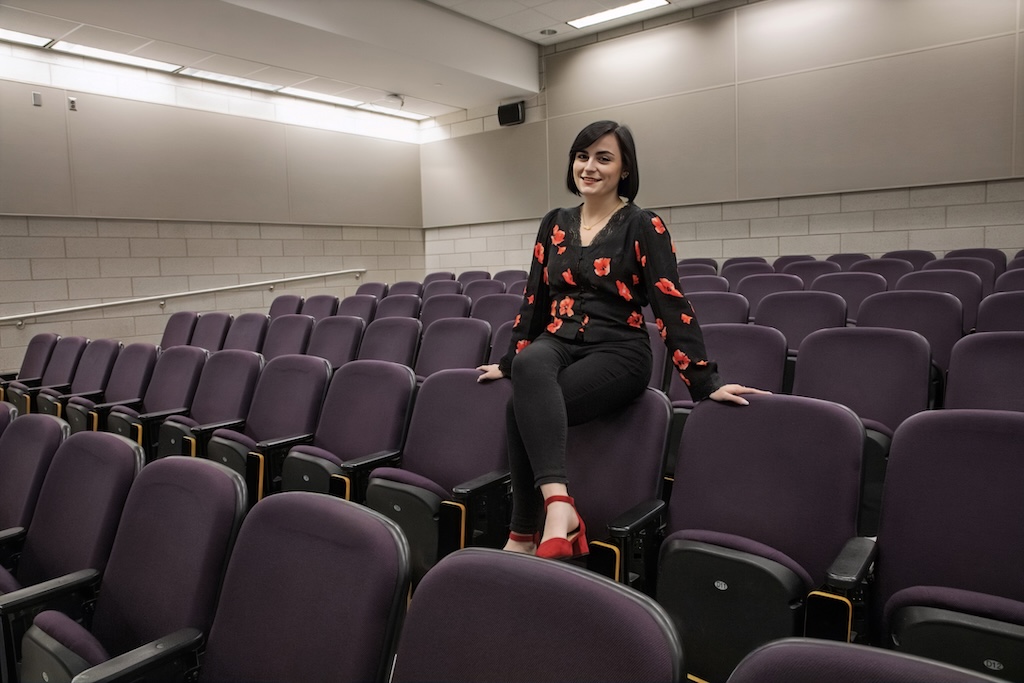
Even as a child growing up in Houston, Alyssa Vadovsky knew she wanted to be a doctor; she just didn’t know what kind.
While the specifics were unclear, the motivation remained the same: understand the human body and find ways to make it better.
Initially, Vadovsky pursued a path toward medical school to become a physician. After graduating from Michigan State University in 2022 with a bachelor’s degree in human biology, she paused those plans and joined the Molecular, Cellular and Integrative Physiology graduate program as a master’s student to gain additional experience and knowledge.
Her career path became clearer when she joined Jason Bazil’s lab.
“I found out how much I enjoyed research,” Vadovsky said. “I realized that I didn't want to leave it for medical school.”
That realization proved pivotal, reshaping her career goals and steering her away from medical school toward a Ph.D. in research.
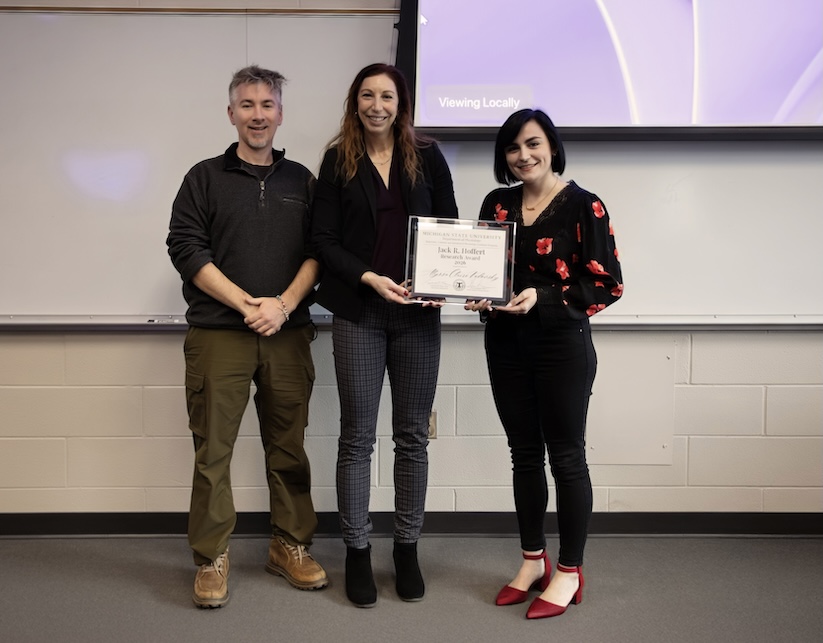
That shift carried her into complex, clinically relevant research on mitochondrial function in cardiovascular disease, work that recently earned her the Department of Physiology’s 2026 Jack R. Hoffert Memorial Scholarship Award and served as validation that she had made the right decision in stepping away from medical school.
“There is a level of value that comes with this award that shows the type of excellence in research work our graduate students do,” she said. “It is a welcomed reminder that the research we do is recognized and respected by our faculty and colleagues.”
Vadovsky’s work involves studying how mitochondria, the cell’s energy-producing structures, are affected in heart failure, with a focus on sex-based differences in disease outcomes. Her research examines how metabolic disruptions occur at both functional and structural levels, including changes in oxygen consumption and mitochondrial damage caused by excess calcium. These conditions mimic heart failure progression and have helped identify potential routes of cardioprotection observed in women.
“Heart disease is the leading cause of death, and as a woman I would like to figure out why there are disparities in risk and occurrence,” she said. “I have always loved cardiac physiology and believe that everyone should be studying some aspect of metabolism to better understand whatever pathophysiology they are interested in.”
After completing her Ph.D. this December, Vadovsky plans to continue her research trajectory in a postdoctoral fellowship, ideally in a human subjects-based setting.
“I hope to build off of my findings and continue with a human subjects-based approach as a postdoctoral researcher,” she said.
Looking ahead, Vadovsky has long-term goals that extend beyond the lab and into the classroom.

“The goal is to find a lab to work in as a postdoctoral fellow and further my research and teaching,” she said. “Ultimately, I want to become a professor and design/teach a physiology course. I have had so many great mentors throughout my time here and believe that they have instilled the skills I need to succeed at this.”
As her MSU chapter approaches its end, Vadovsky said she is excited for what comes next.
“I have loved my time here at MSU and am deeply appreciative of this space and the people in it but am looking forward to calling a new place home,” Vadovsky said. “I have been a student at MSU since 2018, and although I am in a different graduate school than I thought I would be, I feel that this was always the right path for me.”